Apple Intelligence Officially Launches Globally Across iPhone, iPad, and Mac Alongside Next-Generation M4 Silicon Supercomputing Era
CUPERTINO, CALIFORNIA — October 31, 2026 — In what marks the most consequential software and hardware transformation in its modern history, Apple has officially launched Apple Intelligence to hundreds of millions of users worldwide via the release of iOS 18.1, iPadOS 18.1, and macOS Sequoia 15.1. Simultaneously, the tech titan unveiled its next-generation M4, M4 Pro, and M4 Max Apple Silicon family, permanently ending the 8GB baseline memory era by making 16GB of unified memory standard across every Mac.
The launch delivers Apple's distinct, privacy-centric philosophy of artificial intelligence directly into the consumer and enterprise mainstream: blending fast, highly optimized 3-billion-parameter on-device neural models with Private Cloud Compute (PCC)—a verifiable server infrastructure powered by custom Apple Silicon nodes that mathematically guarantees user data is never stored, retained, or exposed to third parties.
1. The First Wave: Seamless System-Wide Utility
Rather than presenting AI as an isolated, standalone chatbot window, Apple has deeply embedded Apple Intelligence into core operating system interactions across Apple's ecosystem:
- System-Wide Writing Tools: Deeply integrated across Mail, Messages, Notes, Pages, and third-party apps, allowing users to rewrite text in Professional, Casual, or Concise tones, proofread grammar with explanations, and summarize dense text into executive bullet points or tables.
- Clean Up in Photos: An on-device generative fill tool that detects and erases distracting background objects, photobombers, or shadows with a single tap while faithfully preserving the authentic photographic lighting, grain, and color science of the original image.
- Intelligent Notification Summaries: Breakthrough on-device natural language synthesis parses long, active group message threads and multi-stack notifications, bubbling up the actionable gist right on the Lock Screen without requiring users to scroll through endless alerts.
- Redesigned Siri with Conversational Context: Siri now features an elegant glowing light border that wraps the edges of the display. Siri maintains conversational context across consecutive requests, understands stumbling speech, and supports instant Type to Siri with a quick double-tap on the navigation bar.
"Apple Intelligence introduces a new era for iPhone, iPad, and Mac, delivering entirely new experiences and tools that will transform what our users can accomplish. Built on years of innovation in silicon and software, Apple Intelligence is generative AI in a way that only Apple can deliver: personal, deeply integrated, and grounded in industry-leading privacy protections."
Key Pillars of Apple Intelligence & M4 Silicon Hardware
2. Private Cloud Compute (PCC): Cryptographic Verifiability in the Cloud
For complex queries requiring larger foundation models beyond the thermal or memory constraints of a smartphone, Apple unveiled its most ambitious security architecture yet: Private Cloud Compute (PCC).
Unlike traditional cloud AI endpoints that log prompts, run on untrusted multi-tenant operating systems, or employ human data annotators, PCC extends the cryptographic security of Apple Silicon into the cloud.
PCC servers run on custom Apple Silicon running a hardened, stripped-down OS without permanent storage or remote shell access. Every single production software image deployed on PCC clusters is published to a cryptographically tamper-proof transparency log. This allows independent global cybersecurity researchers to inspect and verify that Apple's servers execute only the exact code verified by the client device—setting a benchmark for cloud privacy that enterprise AI providers are now racing to emulate.
3. The M4 Silicon Supercomputing Era: Redefining Local Machine Intelligence
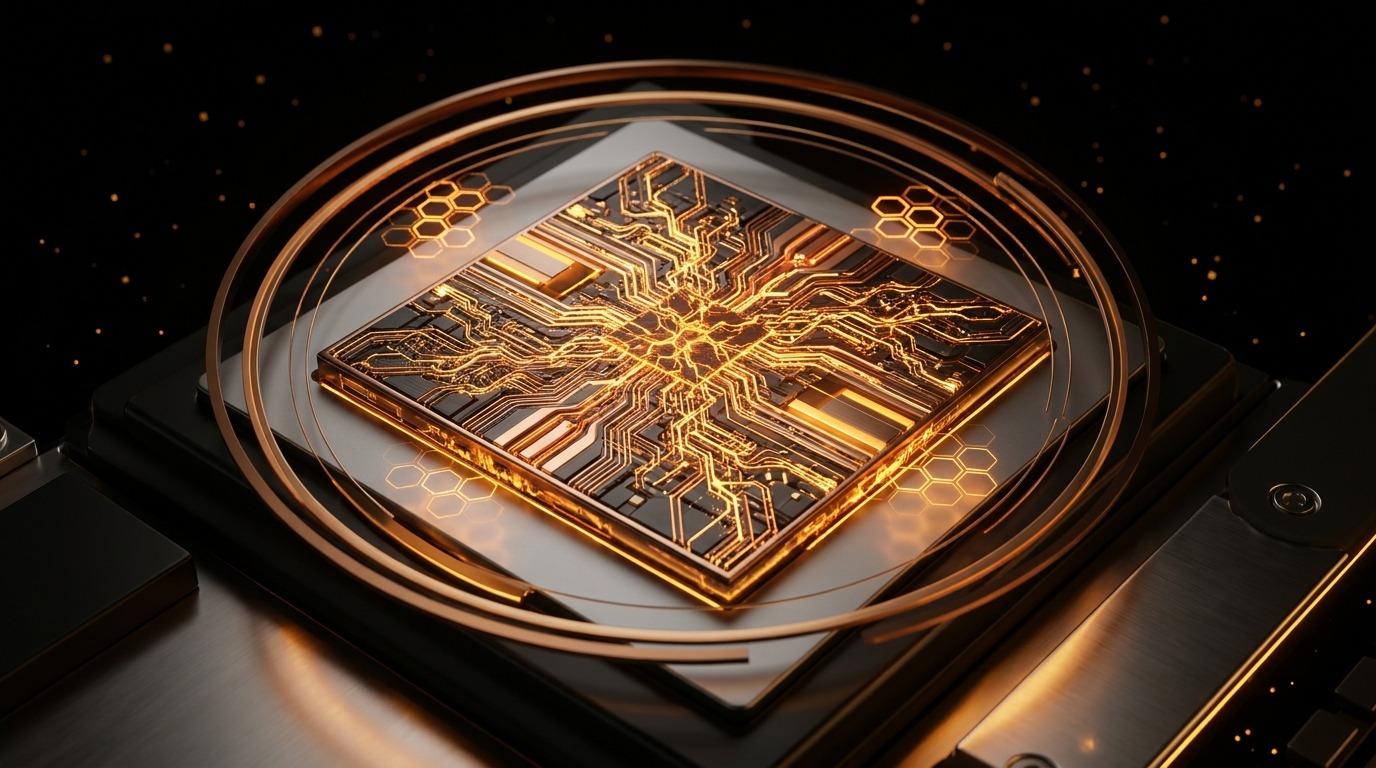
Alongside the software release, Apple unveiled its complete next-generation silicon lineup: the M4, M4 Pro, and M4 Max, debuting across the radically redesigned palm-sized 5-by-5-inch Mac mini, the 24-inch iMac, and the refreshed 14-inch and 16-inch MacBook Pro lines.
Engineered with an enhanced 16-core Neural Engine delivering over 38 trillion operations per second (TOPS), the M4 family provides unmatched local inferencing performance. The M4 Max pushes unified memory bandwidth up to a staggering 546 GB/s and supports up to 128GB of high-speed unified memory. This enables developers, researchers, and enterprise practitioners to load and fine-tune frontier 70-billion-parameter open-weight models locally on a laptop battery without sending proprietary data across external networks.
4. SyncFlo AI Perspective: The Hybrid Future of Enterprise AI
At SyncFlo AI, we believe Apple's dual-pronged rollout marks the beginning of the hybrid AI era. For years, businesses faced a painful tradeoff: deploy nimble local models with limited contextual reasoning, or route sensitive corporate data to centralized cloud LLMs at the risk of security vulnerabilities and escalating API costs.
Apple Intelligence and the M4 architecture prove that high-speed on-device neural processing combined with cryptographically verified cloud extensions is the superior enterprise paradigm. SyncFlo AI's autonomous workflow platform is built to leverage this hybrid topology—routing sensitive internal transactions and employee workflows through verified local execution pipelines while coordinating with secure frontier reasoning clouds when complex, multi-system orchestration is required.