Anthropic Unveils Breakthrough Computer Use API: Claude 3.5 Sonnet Directly Operates Desktop GUIs, Clicks, and Navigates Software Like a Human
SAN FRANCISCO, CA — October 28, 2026 — In what industry analysts are calling the defining turning point for autonomous software agents, AI frontier laboratory Anthropic has officially released a groundbreaking public beta feature dubbed "Computer Use" alongside a substantially upgraded version of its flagship model, Claude 3.5 Sonnet.
Rather than requiring bespoke APIs, customized integrations, or brittle headless scraping scripts for every distinct SaaS tool, Claude 3.5 Sonnet can now interact directly with computers the way human knowledge workers do: by looking at screen pixels, moving mouse cursors to exact (x, y) coordinates, clicking buttons, and typing text across desktop operating systems and web applications.
1. The Shift from API Handshakes to Universal Pixel Agency
Historically, software automation has required engineers to build and maintain rigid API connectors. When a service lacked an API—or when tasks spanned legacy desktop enterprise software, proprietary dashboards, and multi-tab browser journeys—automation ground to an abrupt halt.
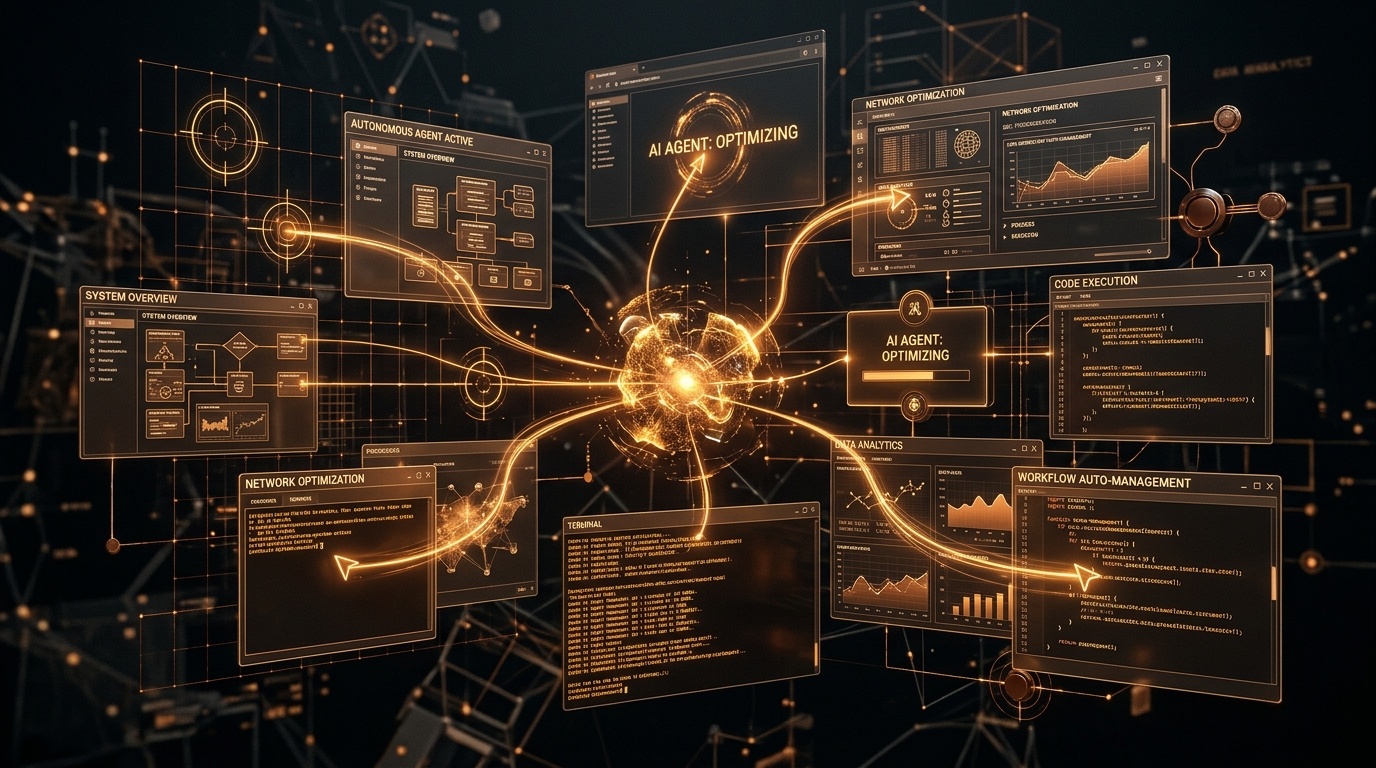
Anthropic's Computer Use paradigm shatters this barrier. By teaching Claude to parse visual screenshot buffers into structured spatial UI coordinate maps, Claude autonomously reasons through user interfaces:
- Visual Screen Perception: Claude receives high-resolution display frames, dynamically locating buttons, dropdowns, modal dialogs, spreadsheet cells, and nested menus.
- Sub-Pixel Action Dispatching: Through standard tool-use schemas, Claude returns precise instructions:
mouse_move(x, y),left_click,mouse_down,key_combination("Control+V"), ortype_text("Invoice #4092"). - Visual Verification Feedback Loop: After every action, the environment captures a fresh screenshot and returns it to Claude, allowing the agent to verify whether a dropdown opened, a page loaded, or an error banner appeared before initiating the next step.
"Instead of making developers write custom tools to help Claude talk to every single piece of software, we trained Claude to use computers the way people do. It can look at a screen, move a cursor, click buttons, and type text. This opens up entirely new horizons for automation across millions of existing applications that were never designed with an API in mind."
Claude 3.5 Sonnet: Computer Use & Benchmark Leaps
2. Real-World Enterprise Adoption: From Replit to Canva and Asana
Early enterprise adopters are already building production workflows around Anthropic's Computer Use API:
- Replit: Utilizing Claude's computer use to evaluate built applications by having the agent navigate live web apps, test interactive buttons, and verify frontend responsiveness during code generation loops.
- Canva: Testing agentic graphic layout adjustments, design asset curation, and repetitive presentation styling where human-like UI navigation is required.
- Asana: Automating project management orchestration, ticket triage, and cross-application data synchronization without requiring bespoke webhook pipelines.
3. Rigorous Red-Teaming with AI Safety Institutes
Giving an autonomous neural model control over a keyboard and mouse introduces unprecedented security considerations. To mitigate risks such as prompt injection, unauthorized financial transactions, or automated credential harvesting, Anthropic conducted months of pre-deployment safety evaluations:
- Joint Safety Evaluations: Anthropic collaborated closely with the US AI Safety Institute (US AISI) and the UK AI Safety Institute (UK AISI) to stress-test Claude's cyber capabilities, system access guardrails, and autonomous resilience.
- Prompt Injection Defense: The model includes specialized training to recognize adversarial screen text (such as hidden malicious instructions inside web pages or emails) and refuse unauthorized instruction overrides.
- Containerized Sandboxing: Anthropic explicitly advises enterprise operators to run Computer Use agents inside isolated virtual machine environments with restricted network egress and strict human-in-the-loop approvals for sensitive transactions.
4. SyncFlo AI Synthesis: Orchestrating the Next-Gen Autonomous Coworker
At SyncFlo AI, our intelligent enterprise workflow architecture natively integrates frontier foundation models like Claude 3.5 Sonnet directly into operational workflows. While raw models provide the brain and visual reflexes, SyncFlo AI delivers the enterprise governance, credential vaulting, audit logging, and process orchestration layer necessary to deploy autonomous coworkers safely.
By coupling Anthropic's breakthrough Computer Use API with SyncFlo AI's real-time supervision fabric, enterprises can automate complex back-office workflows—such as ERP data reconciliation, invoice processing, CRM updates, and cross-platform document migration—with zero code modifications to existing IT infrastructure.