Anthropic Unveils Claude Code Mods: Programmable TypeScript Hooks Turn Developer CLI into Headless Autonomous Agent Runtime
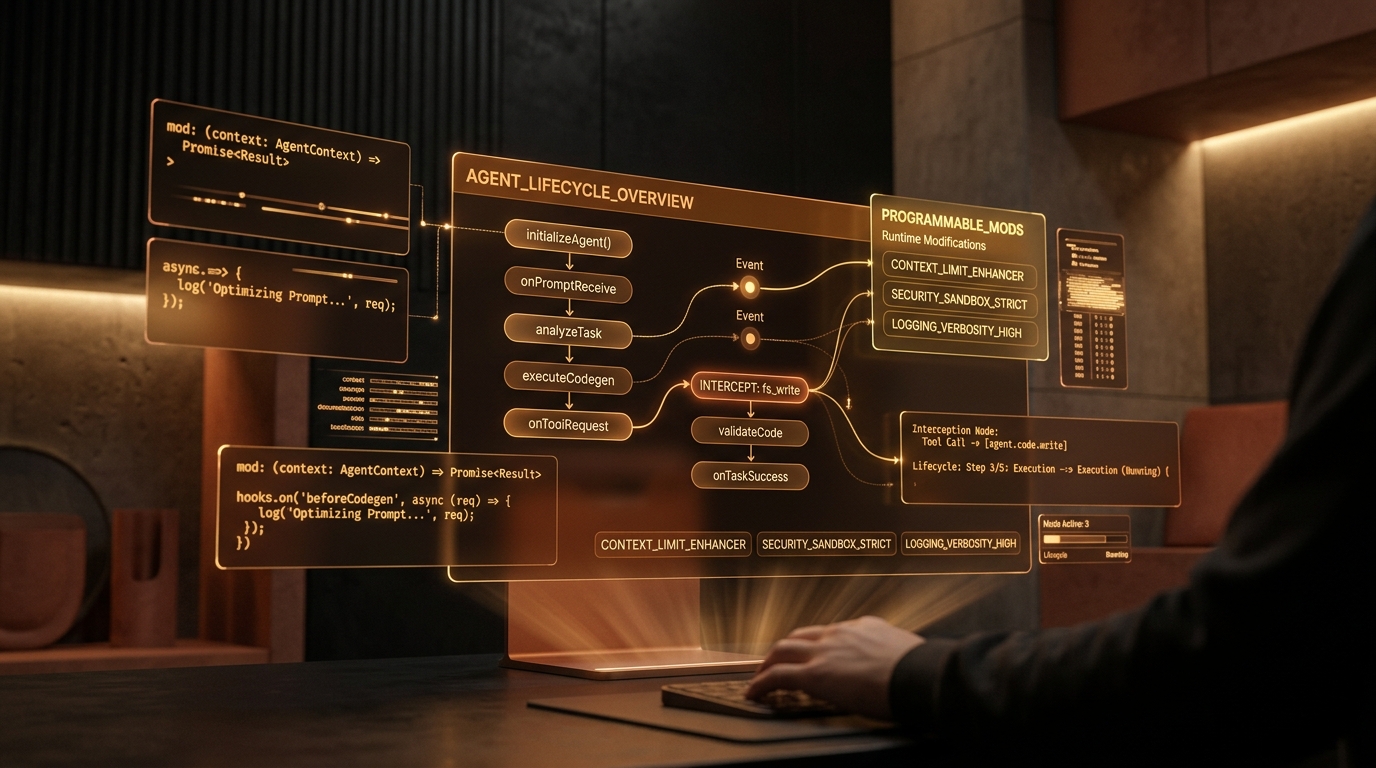
SAN FRANCISCO — October 3, 2026 — Anthropic has announced the official release of Claude Code Mods, a major expansion to its agentic coding environment shipping with Claude Code version 2.1.287. By introducing an in-place TypeScript and JavaScript hook architecture, Mods allow engineering organizations to treat Claude Code not just as an interactive developer assistant, but as a fully programmable, headless autonomous execution runtime for complex software engineering pipelines.
Until now, developers seeking to automate repetitive coding workflows were confined to passive shell hooks or cumbersome HTTP webhooks that executed asynchronously after actions occurred. Claude Code Mods revolutionize this model by providing deep, synchronous lifecycle interception. Developers can now programmatically rewrite prompts before they touch frontier models, block or sanitize risky terminal commands in real-time, inject contextual company policies, and even inject custom terminal interfaces and telemetry dashboards.
1. From Interactive Chat to Programmable Agentic Runtime
At the foundation of Claude Code Mods is the newly unified Claude Agent SDK, now available natively for both TypeScript and Python. Rather than treating an agent as a black-box conversational loop, the SDK exposes every phase of the agent's internal state machine:
- Prompt Interception & Rewriting: Modify or augment user prompts dynamically—injecting relevant Git branch context, Jira ticket descriptions, or strict internal code style constraints before LLM inference.
- Pre- and Post-Tool Execution Gates: Inspect parameters for filesystem modifications, bash execution, or API calls. Mods can validate safety policies, require two-factor confirmation for destructive operations, or mock API responses for staging tests.
- Dynamic UI and Terminal Customization: Inject custom status bars, progress indicators, interactive dialogs, and custom slash commands (e.g.,
/security-checkor/deploy-preview) directly into developer terminal sessions.
"Developers shouldn't have to adapt their workflow to an AI agent. The AI agent should adapt to their stack, their guardrails, and their developer culture. Claude Code Mods turn our coding agent into an open, programmable runtime that teams can tailor with simple, elegant TypeScript."
Claude Code Mods Architecture & Capabilities
/plugin allows engineering organizations to distribute verified corporate mods across thousands of developer seats.
2. Hot-Reloadable Mods and Natural Language Creation
One of the most praised aspects of the release is the ease of authoring mods. Developers can ask Claude Code directly to synthesize a mod in natural language—for instance, "Create a mod that blocks any git commit touching `.env` files and logs all modified TypeScript files to a metrics endpoint."
Claude Code writes the corresponding TypeScript code into the developer's local configuration directory (~/.claude/mods/) and immediately hot-reloads the plugin into the active session without restarting. Enterprise teams can distribute approved bundles through standard npm packages or internal Git repositories, enforcing strict sandboxing permissions and audit trails.
3. Enterprise Security and Guardrail Enforcement
As organizations scale autonomous coding assistants across hundreds of engineers, security compliance becomes a paramount concern. With Claude Code Mods, security teams gain granular programmatic control over agent activities:
- Secret Leak Prevention: Regex and semantic scanning mods inspect generated code and bash command arguments, killing processes before credentials or production tokens are leaked.
- Network Air-Gapping: Enforce strict domain whitelists on external tool requests, preventing rogue prompt injection from causing arbitrary external network requests.
- Formal Verification Bridges: Pair with automated linters, compilers, and unit tests to ensure that an agent cannot submit a pull request without passing complete type checking and lint suites.
4. SyncFlo AI Ecosystem Integration
Through the newly released Claude Agent SDK, SyncFlo AI has launched official SyncFlo Mods for enterprise engineering teams.
Using the SyncFlo Enterprise Mod, engineering teams can synchronize Claude Code with SyncFlo's autonomous revenue and product operational graphs. Features built by autonomous coding swarms are automatically cross-checked against product specifications, tracked in sprint logs, and documented in real-time, eliminating friction between engineering output and business operations.