Google DeepMind Debuts AlphaDiscovery: Autonomous Closed-Loop Robotic Lab Synthesizes 1,200 Stable Solid-State Battery Electrolytes
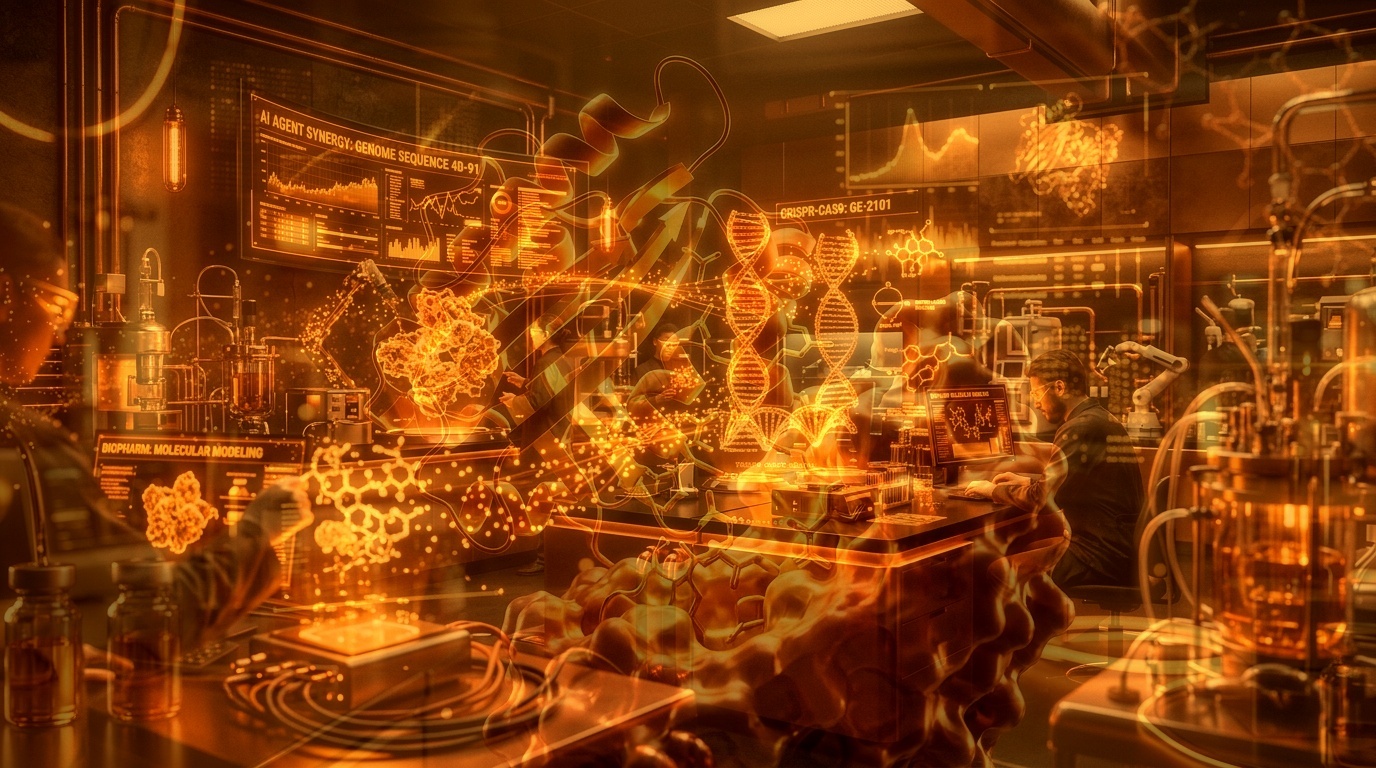
LONDON & BERKELEY, CA — September 29, 2026 — In what researchers are heralding as the advent of truly autonomous physical science, Google DeepMind, in close partnership with the Lawrence Berkeley National Laboratory (LBNL) and UC Berkeley, has officially unveiled AlphaDiscovery. The breakthrough platform couples DeepMind’s latest Gemini 3.8 Chemical Reasoning foundation models directly to an automated robotic synthesis facility (A-Lab 2), executing closed-loop material design, synthesis, and physical characterization without human intervention.
In its inaugural 21-day demonstration run, AlphaDiscovery autonomously designed and successfully synthesized 1,200 previously unrecorded inorganic crystal structures with an unprecedented 71.4% laboratory realization rate. Among these, the system identified three novel garnet-type solid-state lithium-ion electrolytes exhibiting room-temperature ionic conductivities surpassing 25 mS/cm—more than five times greater than state-of-the-art liquid battery electrolytes, with absolute resistance to thermal runaway and dendritic short-circuits.
1. The Synthesis Bottleneck: Bridging Theory to Physical Matter
For decades, computational chemistry excelled at proposing theoretical candidate molecules inside computer memory, but over 98% of simulated compounds were never physically realized due to unknown thermodynamic pathways, uncooperative kinetics, and laboratory synthesis bottlenecks that required months of painstaking trial-and-error by human chemists.
AlphaDiscovery solves this fundamental "simulation-to-reality" chasm. Instead of merely calculating ground-state energies, the AI actively operates the physical cleanroom. It decides precursor stoichiometry, dispenses micro-gram reagents inside argon-purged gloveboxes, tunes sintering laser temperatures, and interprets in-situ X-ray powder diffraction (XRD) patterns in real-time.
"AlphaDiscovery marks the moment when artificial intelligence transitions from predicting scientific phenomena on screens to physically realizing new matter in the real world. We have compressed eight centuries of solid-state chemical experimentation into three weeks of autonomous robotic execution."
AlphaDiscovery Autonomous Lab Performance Metrics
2. The Green Energy Revolution: Commercial Battery Implications
The immediate commercial implications for clean energy and automotive electrification are staggering. Current electric vehicles and grid storage systems rely on liquid organic electrolytes that degrade over charge cycles and pose severe fire hazards under mechanical puncture or overvoltage.
The three leading solid-state electrolyte formulations isolated by AlphaDiscovery—designated Li-AD-409, Li-AD-722, and Li-AD-1088—enable non-combustible lithium-metal anodes with projected battery pack energy densities exceeding 650 Wh/kg (double current commercial cells). Early pouch-cell prototypes demonstrate 80% fast-charge capability in under 7 minutes with zero dendrite formation over 2,500 continuous cycles.
3. Open Science & The Materials Project 3.0
In an extraordinary commitment to global scientific acceleration, Google DeepMind and LBNL announced that the crystallographic coordinates, synthesis recipes, and electrochemical impedance spectra for all 1,200 compounds will be published openly via the Materials Project 3.0 repository under a Creative Commons Zero (CC0) license.
Academic laboratories and industrial battery manufacturers worldwide will be able to immediately replicate, test, and scale the materials for automotive, aerospace, and medical device manufacturing.
4. Accelerated R&D Telemetry with SyncFlo AI
For industrial enterprises and advanced chemical manufacturers, managing the colossal volume of real-time sensory data generated by autonomous laboratory workcells requires unified pipeline automation.
SyncFlo AI has launched native Autonomous Lab Telemetry Connectors compatible with AlphaDiscovery and standard robotic cleanroom protocols. Enterprise materials science teams can now pipe automated XRD characterization data directly into SyncFlo, synchronizing real-time experiment results, automated patent filings, and supply-chain precursor purchasing with zero manual intervention.