
Alibaba Unveils Zhenwu V900 AI Superchip: 216GB GPU Memory, 500,000-Chip Supernode Clusters, and 10-Trillion-Parameter Qwen Foundation Roadmap
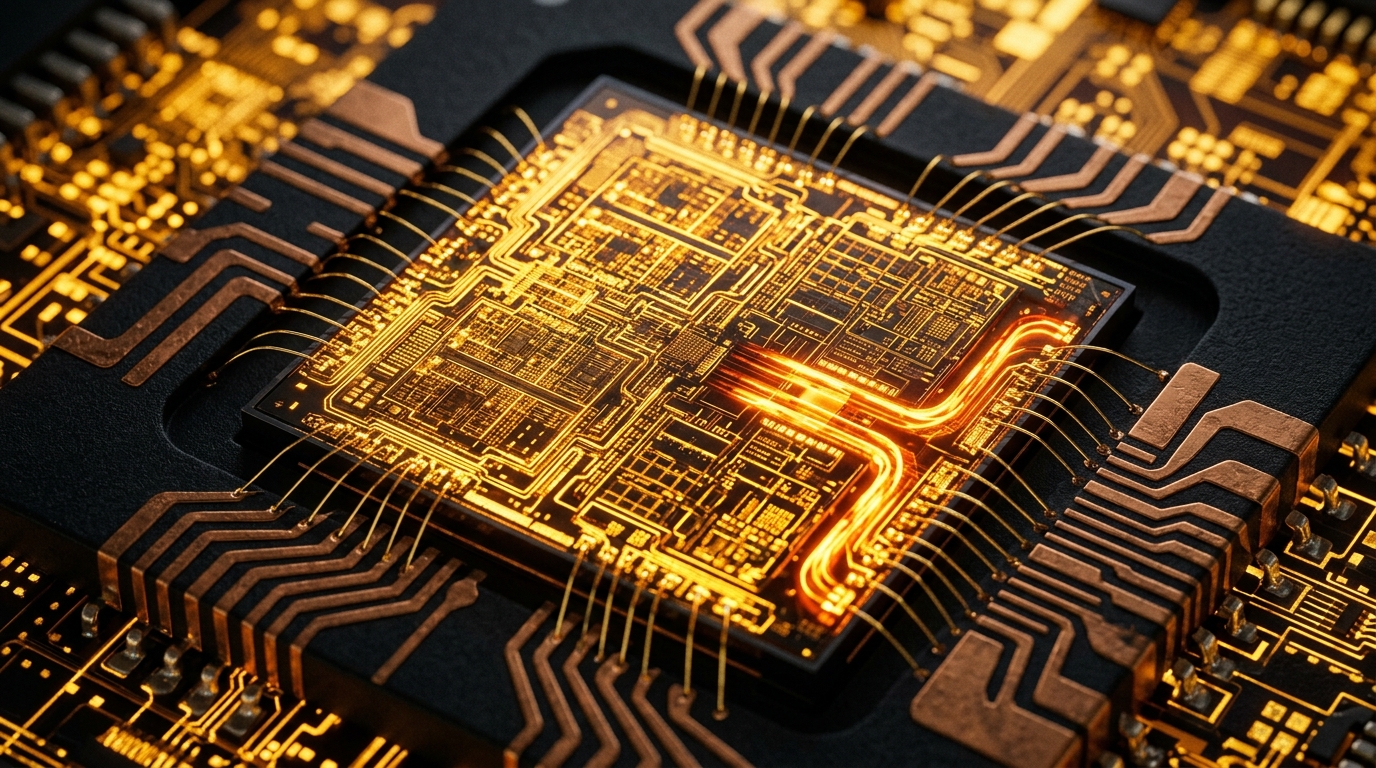
HANGZHOU, CHINA — September 28, 2026 — In an emphatic demonstration of semiconductor sovereignty and hyperscale computing prowess at the Apsara Conference 2026, Alibaba Group’s specialized chip division, T-Head, has officially unveiled the Zhenwu V900—hailed as the most formidable domestic artificial intelligence accelerator ever produced in the Eastern hemisphere. Engineered specifically to tackle foundation models spanning 5 trillion to 10 trillion parameters, the Zhenwu V900 represents a monumental leap forward in memory density, inter-node throughput, and cluster scalability.
Arriving just four months after Alibaba's introduction of the Zhenwu M890, the V900 demonstrates an aggressive architectural cadence that outpaces traditional chip revision cycles. Alibaba executives announced that the processor will enter volume mass production in the first quarter of 2027, serving as the foundational computational bedrock for next-generation frontier iterations of Alibaba's flagship Qwen model ecosystem.
1. Architectural Breakthroughs: 3x Performance Leap & 216GB GPU Memory
The Zhenwu V900 delivers a staggering 300% raw performance increase over the M890 across dense matrix multiplication and attention kernel operations. To eliminate the severe memory-wall bottlenecks encountered when training multi-trillion parameter MoE (Mixture of Experts) architectures, T-Head outfitted each V900 module with 216 GB of high-bandwidth memory (HBM) running at an unprecedented 1,200 GB/s of bidirectional inter-chip bandwidth.
By incorporating native hardware acceleration for emerging ultra-low precision floating-point representations—specifically FP8 and FP4 micro-scaling formats—the V900 enables multi-agent reinforcement learning (RL) runs and test-time reasoning search trees to operate at 4.2x greater energy efficiency compared to legacy FP16 pipelines.
"The frontier of artificial intelligence is no longer dictated by single-die compute alone; it is dictated by the seamless coherence of hundreds of thousands of chips functioning as a singular cognitive engine. The Zhenwu V900 was designed from the silicon substrate upward to train 10-trillion-parameter reasoning models without communication stalling."
Alibaba Zhenwu V900 Technical Architecture Matrix
2. The 500k-Chip Supernode: Overcoming the Scaling Boundary
A standout capability revealed during the Apsara keynote is Alibaba's new Unified Supernode Topology, capable of interconnecting up to 500,000 Zhenwu V900 accelerators within a single, coherent datacenter grid. By pairing the V900 with Alibaba's proprietary Yitian CPU server roadmap via direct memory interconnects, the architecture allows processors and accelerators to share a unified physical address space.
This tightly coupled fabric virtually eliminates PCIe serialization overhead, permitting frontier AI models to dynamically route attention tokens across hundreds of nodes with sub-microsecond latency. During simulated benchmark trials shared at the conference, a 64,000-chip Zhenwu cluster sustained 89.4% linear scaling efficiency during synthetic pre-training on 8-trillion-token synthetic corpora.
3. Powering the Next Qwen Generation: Towards 10 Trillion Parameters
Alibaba Cloud confirmed that the primary beneficiary of the Zhenwu V900 will be the upcoming generation of open and enterprise Qwen models. While current models operate in the several-hundred-billion parameter bracket, the V900 infrastructure will unlock MoE systems with over 10 trillion total parameters and hundreds of specialized routing experts.
Crucially for the open-source community, Alibaba emphasized its continued commitment to releasing distilled, edge-optimized checkpoints of these mega-models, ensuring that open-weights developers worldwide can tap into frontier cognitive reasoning without needing hyperscale cluster access.
4. Strategic Implications for Global Enterprise Sync via SyncFlo AI
As foundational compute clusters diversify beyond North American silicon ecosystems, global enterprises must adopt resilient, multi-cloud orchestration platforms that can deploy across diverse hardware backends without application rewrites.
SyncFlo AI has announced planned support for Alibaba Cloud's Zhenwu compute instances alongside existing NVIDIA, TPU, and Cerebras endpoints. Through SyncFlo's unified orchestration layer, multinational organizations can seamlessly balance training workloads, route edge inference jobs to the lowest-latency regional silicon, and guarantee uninterrupted agentic workflow continuity worldwide.