Microsoft Launches Copilot Autopilot: Autonomous Persistent Agent Workspaces & Multi-Cloud Task Execution Engine
REDMOND, WA — September 25, 2026 — In what industry analysts describe as Microsoft's most significant AI architectural shift since the debut of Microsoft 365 Copilot, Microsoft AI today rolled out a complete restructuring of the Copilot ecosystem into three distinct functional destinations: Home, Code, and Autopilot. The crowning jewel of the release, Copilot Autopilot, introduces persistent agentic workspaces that operate autonomously in the background, executing multi-step cross-application tasks without requiring constant human oversight.
Spearheaded by Microsoft AI CEO Mustafa Suleyman and Chairman Satya Nadella, the launch signals the industry's decisive transition from reactive chat dialogs to proactive, asynchronous agentic labor. Rather than waiting for prompt-by-prompt user input, Autopilot agents are provisioned with their own persistent identity, sandboxed execution environment, enterprise tool registry, and long-term memory store.
1. The Three New Copilot Destinations: Home, Code, and Autopilot
Under the new unified interface, Microsoft organizes AI assistance into three clear operational domains:
- Copilot Home: Seamlessly combines conversational intelligence with real-time "Cowork" collaboration, allowing teams to draft documents, synthesize cross-organization communications, and brainstorm alongside synchronized AI teammates.
- Copilot Code: A dedicated workbench integrating GitHub Copilot, automated test suites, repository-wide architectural refactoring, and automated code review pipelines directly into browser and desktop IDEs.
- Copilot Autopilot: The premier autonomous agent execution engine. Users assign high-level business goals—such as preparing monthly financial reconciliations, onboarding new supply chain vendors, or triaging customer bug reports—and Autopilot spins up persistent agent workers that carry out the workflow over hours or days.
"We are crossing the threshold from assistance to delegation. With Copilot Autopilot, you don't merely ask a model for an answer—you give a colleague an objective, and it coordinates across tools, data sources, and cloud boundaries with persistent memory and verifiable accountability."
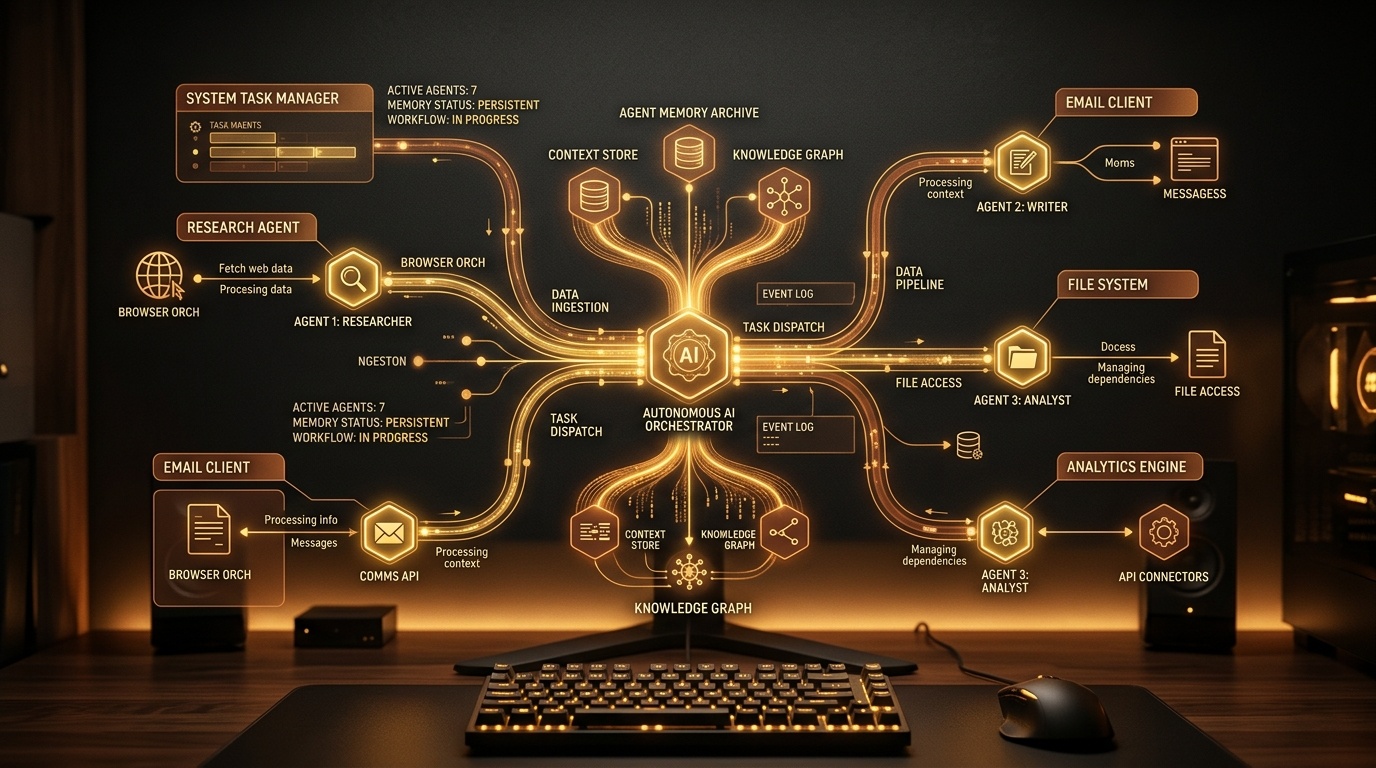
Copilot Autopilot Architectural Specifications
2. The Economics of Agentic Labor: Autonomous Work Units (AWUs)
Alongside the technical architecture, Microsoft revealed a landmark overhaul of its enterprise pricing model. Moving beyond rigid per-seat licensing, Microsoft introduced Autonomous Work Units (AWUs). Under this consumption-based paradigm, organizations purchase tokenized execution pools that scale dynamically based on the complexity and compute depth of background tasks.
A standard routine reconciliation consumes mere fractions of an AWU, while a deep cross-organization audit spanning thousands of Excel models, PowerBI dashboards, and external Salesforce records meters consumption dynamically based on model inference and API invocations. Microsoft confirmed that current Copilot Pro and Enterprise subscribers will receive a monthly baseline allotment of AWUs included in their standard subscriptions.
3. Enterprise Security and SyncFlo Autonomous Pipeline Integration
Security and governance remain paramount in Microsoft's design. Autopilot agents integrate with Microsoft Purview for automated sensitivity labeling and data loss prevention (DLP). Crucially, agents enforce human-in-the-loop checkpoints before executing irreversible actions—such as dispatching corporate payments, deleting cloud resources, or publishing customer-facing communications.
SyncFlo AI has announced day-one bidirectional connector compatibility with Copilot Autopilot. Through SyncFlo's low-latency event synchronization hub, enterprises can now bridge Microsoft Autopilot workflows directly into external CRM, e-commerce, and proprietary database environments, executing end-to-end autonomous business logic with verifiable auditability.