Google DeepMind Unveils AlphaGenome Atlas: 1-Petabyte AI Database Mapping Molecular Impacts Across All 9 Billion Human Genetic Variants
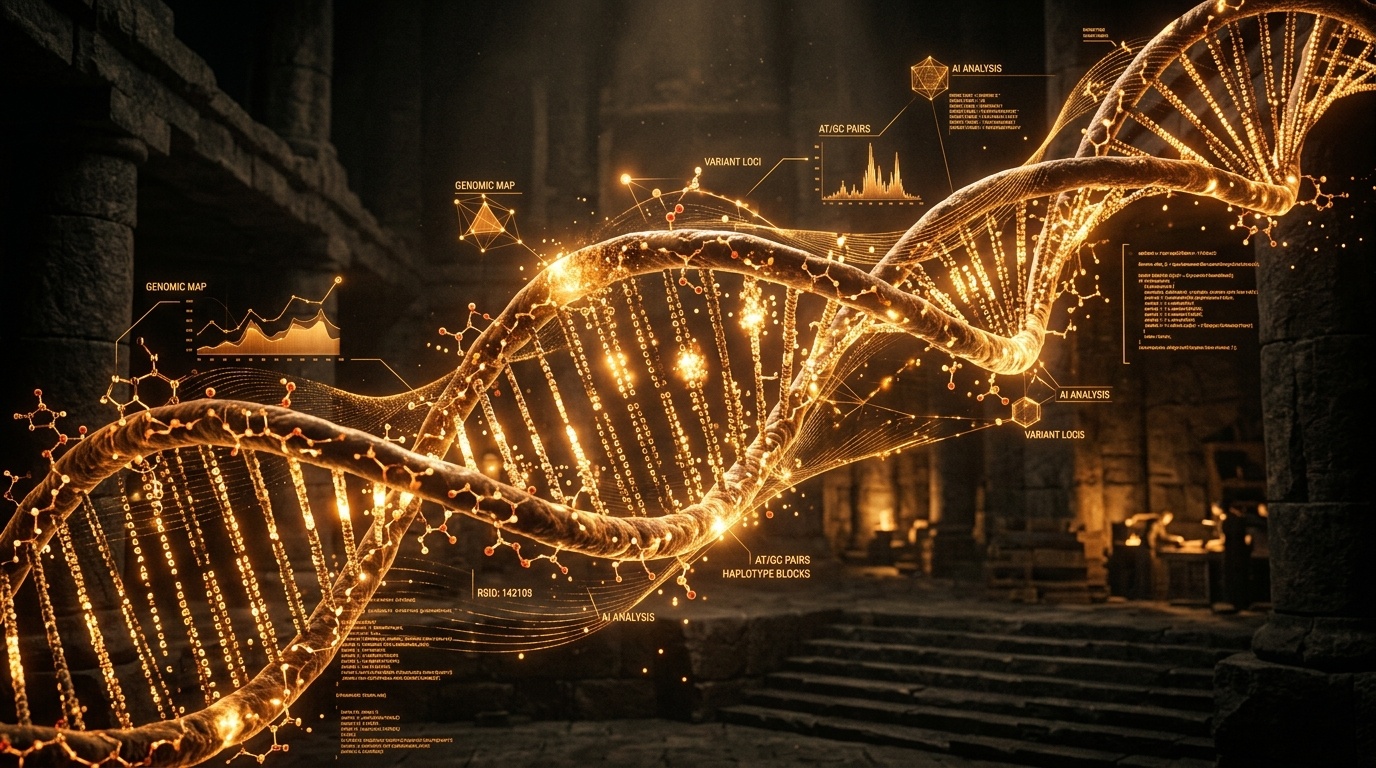
LONDON, UK — September 23, 2026 — In what biomedical researchers are hailing as the most consequential breakthrough in functional genetics since the Human Genome Project, Google DeepMind today launched the AlphaGenome Atlas. Spanning an astonishing 1 petabyte of precomputed predictions, the atlas maps the functional and cellular consequences of all 9 billion possible single-nucleotide variants (SNVs) across the entire human genome.
For decades, molecular biology has struggled with the "dark matter" of human DNA. While previous landmark models such as AlphaFold focused on the ~2% of the genome that directly codes for proteins, over 98% of human DNA consists of non-coding regulatory sequences that control gene expression, chromatin architecture, and splicing dynamics. The AlphaGenome Atlas illuminates this vast non-coding universe, offering researchers and clinical geneticists an unprecedented computational microscope into human biology and disease etiology.
1. Deciphering the 98% Non-Coding "Dark Genome"
When a physician sequences a patient with an undiagnosed rare disease, they routinely discover hundreds of thousands of genetic variants whose biological consequences are unknown. The AlphaGenome Atlas replaces slow, costly wet-lab assays with precomputed transformer simulations that evaluate:
- Transcriptional Enhancer Disruption: Quantifying how mutations in distant non-coding regulatory elements alter target gene expression levels across 128 human tissue types.
- Cryptic RNA Splicing: Predicting aberrant intron retention and exon skipping triggered by subtle base substitutions deep within non-coding regions.
- Chromatin Accessibility & Epigenetics: Modeling 3D DNA conformation changes, nucleosome positioning, and transcription factor binding affinities at single-base resolution.
"AlphaFold solved how proteins fold; AlphaGenome Atlas solves how the genetic operating system that controls them actually functions. By mapping all 9 billion single-letter changes in human DNA, we are handing scientists a universal search engine for human genetics and precision medicine."
AlphaGenome Atlas Computational Specifications
2. The AVI Score & Real-World Rare Disease Diagnosis
Central to the atlas is the AlphaGenome Variant Impact (AVI) score. Rather than forcing bioinformaticians to parse dozens of high-dimensional epigenetic matrices, AVI distills multiple biophysical metrics into a single calibrated risk score. A score approaching 1.0 indicates a severe disruption of cellular regulatory machinery.
Early clinical trials have yielded immediate diagnostic breakthroughs. In a pilot collaboration with the Broad Institute of MIT and Harvard, clinicians utilized AlphaGenome Atlas to analyze cold cases of unresolved pediatric neurodevelopmental disorders. The platform successfully prioritized an uncharacterized non-coding variant upstream of the DNM1 gene, identifying the exact causative mutation that had eluded standard exome sequencing for seven years.
3. Antigravity Skill Integration & SyncFlo Bio-Intelligence Pipelines
DeepMind announced that AlphaGenome Atlas is not only available through a public browser portal and BigQuery data sharing, but also features a dedicated, official skill within Google Antigravity—Google's agent-first development platform. Autonomous research agents can query genomic coordinates, retrieve variant impact tensors, and automate in-silico drug target validation pipelines without manual data wrangling.
SyncFlo AI has integrated AlphaGenome Atlas API endpoints into its enterprise life sciences workflows. Pharmaceutical and biotech teams using SyncFlo can now cross-reference proprietary clinical trial datasets against the AlphaGenome Atlas, dramatically accelerating target identification and biomarker validation for next-generation personalized therapeutics.