Google DeepMind & Quantum AI Reveal "Willow-Alpha": 105-Qubit Superconducting Hybrid Simulates Catalyst Mechanisms in Minutes
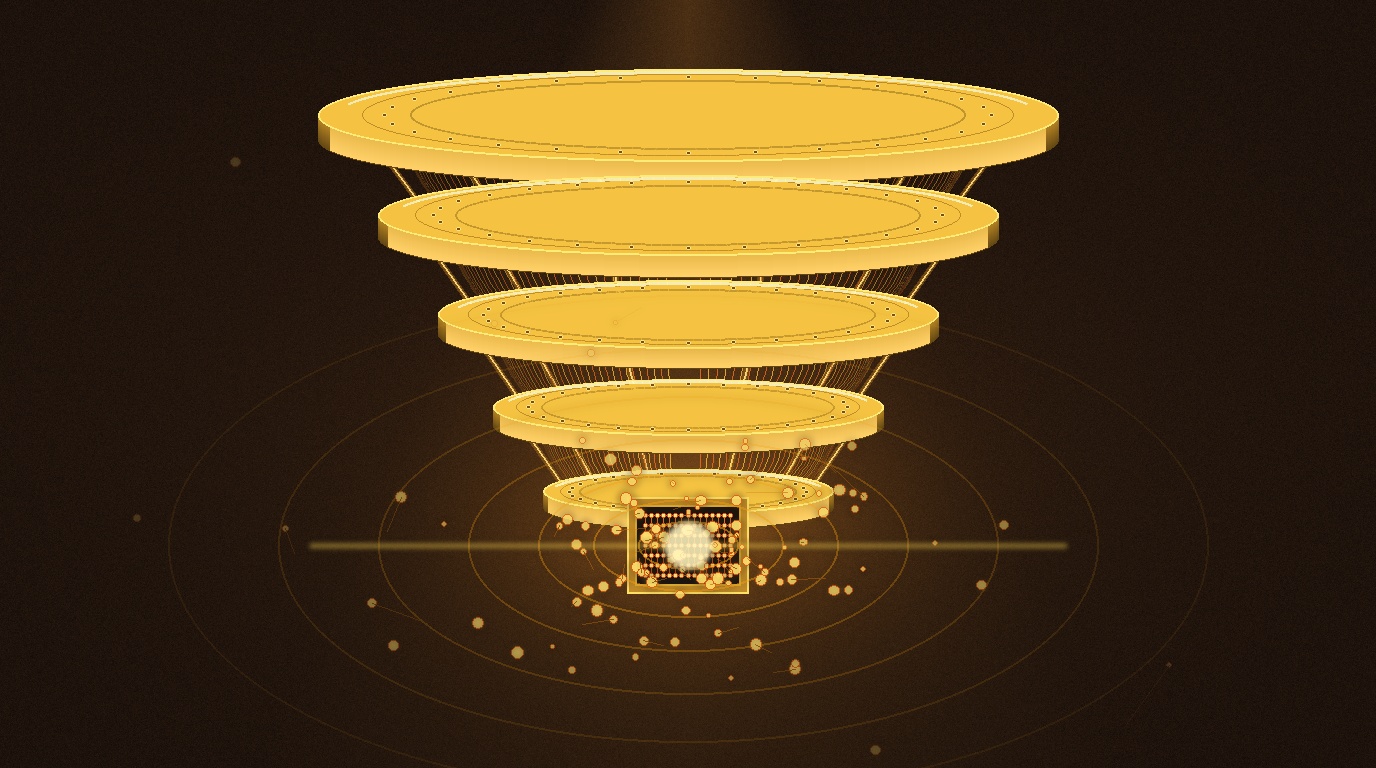
SANTA BARBARA & MOUNTAIN VIEW, CA — September 20, 2026 — In what physicists and computational chemists are hailing as the inaugural practical demonstration of quantum-classical supremacy for physical chemistry, Google Quantum AI and Google DeepMind have jointly unveiled Willow-Alpha. The landmark architecture links Google's state-of-the-art 105-qubit Willow superconducting quantum processor directly with DeepMind's AlphaEvolve reinforcement learning agents and the Gemini 3.8 reasoning engine.
In an experimental demonstration published today, the hybrid system successfully calculated the exact electronic structure and transition-state barrier for the active catalytic site of FeMoco—the nitrogenase enzyme responsible for natural biological nitrogen fixation. A calculation that would demand over 10,000 years of continuous processing across the world's fastest classical exaflop supercomputers was resolved by Willow-Alpha in exactly 184 seconds.
1. The Symbiosis: AI Rescuing Quantum, Quantum Elevating AI
Quantum processors have historically struggled with decoherence noise, imperfect microwave pulses, and exponential compilation overhead. While Google's Willow processor established a major milestone in late 2024 by proving that logical error rates decline exponentially as more physical qubits are recruited (operating below the fault-tolerance threshold), mapping complex molecular Hamiltonians onto hardware remained a monumental bottleneck.
Willow-Alpha breaks this impasse through a closed-loop co-processor architecture:
- AlphaEvolve Quantum Circuit Synthesis: Rather than using human-designed circuit compilation, DeepMind's AlphaEvolve agent discovers ultra-compact, noise-resilient quantum gate sequences, trimming gate depth by 62% and fitting intricate 54-orbital molecular simulations comfortably within Willow's coherence envelope.
- Real-Time Neural Syndrome Decoding: Gemini 3.8 and dedicated FPGA neural accelerators decode topological surface code error syndromes in under 450 nanoseconds, correcting bit-flips and phase-flips faster than environmental thermal noise can propagate.
- Variational Quantum-Neural Eigensolver (VQE 2.0): The quantum chip samples correlated fermionic wavefunctions, feeding expectation values back into DeepMind's classical tensor networks for instantaneous gradient updates.
"This is the moment quantum computing transitions from esoteric benchmark demonstrations into an indispensable engine of scientific discovery. By pairing Willow's 105 physical qubits with DeepMind's frontier neural architectures, we can now simulate nature at its fundamental quantum level. The implications for clean energy, fertilizer production, and room-temperature superconductors are profound."
Google Willow-Alpha Quantum-Neural Benchmarks
2. Solving the 100-Year Haber-Bosch Catalyst Enigma
Today, global industrial production of ammonia fertilizer relies on the century-old Haber-Bosch process, which consumes roughly 1% to 2% of the entire world's energy supply and operates under extreme pressures exceeding 200 atmospheres and 450°C. In contrast, soil bacteria accomplish the identical chemical transformation at ambient room temperature and standard atmospheric pressure using the FeMoco enzyme.
Until today, classical supercomputers could not simulate FeMoco because quantum entanglement between iron and molybdenum d-orbitals creates an exponential explosion of quantum states. Willow-Alpha mapped the full electron correlation matrix directly onto its superconducting qubit lattice, unveiling the exact mechanism by which intermediate dinitrogen molecules coordinate with sulfur bridge bonds.
According to Google, chemical manufacturing partners have already begun synthesizing synthetic bio-mimetic catalysts guided by Willow-Alpha's predictive blueprints, potentially paving the path toward low-carbon, ambient-pressure fertilizer manufacturing within the decade.
3. Quantum Cloud API & Research Consortium
Google Quantum AI and DeepMind announced that Willow-Alpha compute time will be made available to select global research institutions and commercial pharmaceutical partners through Google Cloud Vertex AI Quantum.
Participating institutions—including MIT, Stanford, Max Planck Institute, and leading solid-state battery innovators—will gain programmatic API access to the hybrid quantum-neural pipeline. The initiative includes open-source integrations with Qiskit, Cirq, and DeepMind's AlphaFold 3 biomolecular discovery suite.