Anthropic Launches Claude Code: Autonomous Terminal Engineering Agent with Checkpoint Rewind & MCP Standard
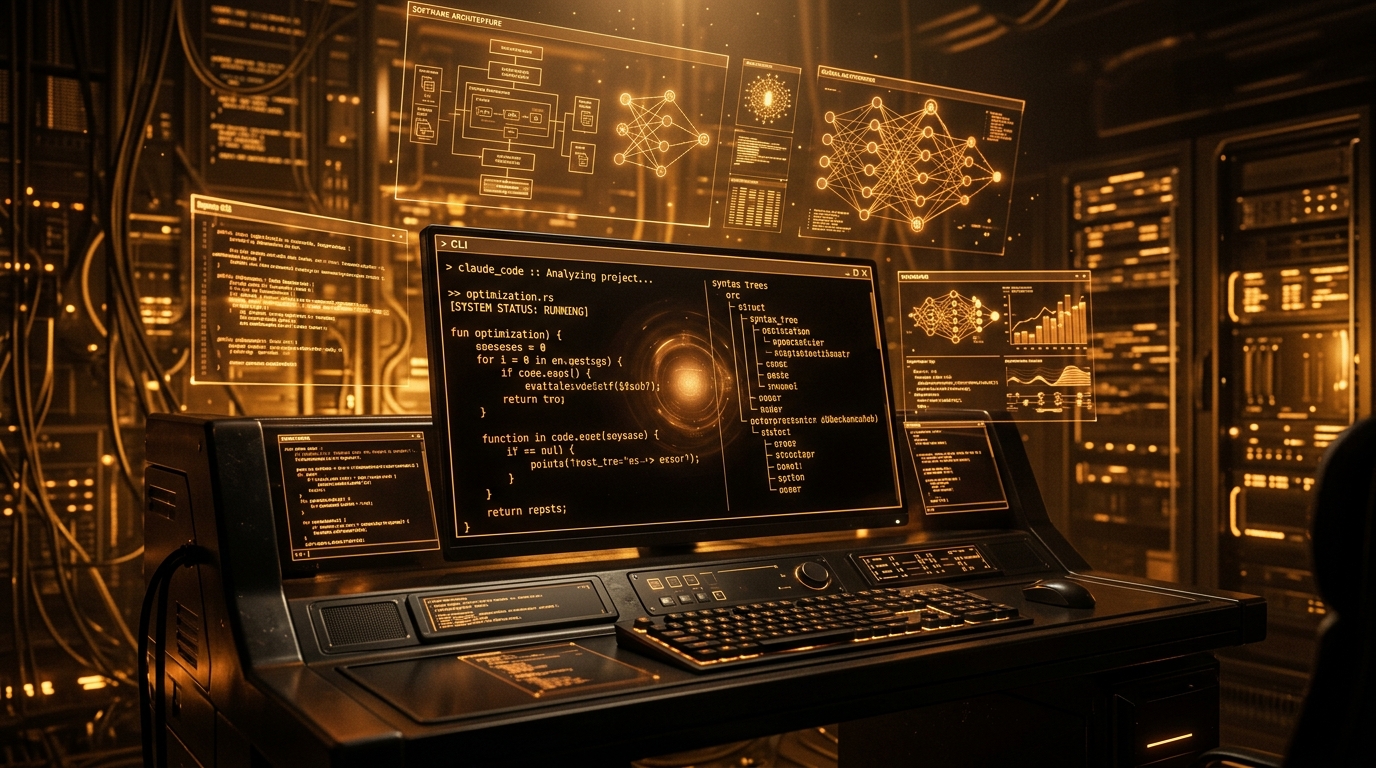
SAN FRANCISCO, CA — August 18, 2026 — In a defining release for software development automation, Anthropic has officially launched Claude Code, an agentic command-line interface (CLI) tool designed to autonomously write code, execute test suites, debug build failures, and navigate large-scale enterprise repositories directly within the developer's terminal environment.
1. The Shift to Terminal-Native Autonomous Loops
While previous generations of AI coding assistants functioned primarily as tab-completion plugins or web chat interfaces, Claude Code operates on an autonomous agentic loop: gathering repository context, reading and modifying files across complex dependency graphs, issuing shell commands, and observing output to iteratively correct its own syntax or logic errors.
By living directly in the CLI, Claude Code leverages the full tooling ecosystem of modern software engineering—including Unix utilities, compilers, test runners, container runtimes, and version control systems—without requiring proprietary web sandbox lock-in.
"Claude Code transforms the terminal from a static prompt into a collaborative agentic workspace. It reads entire repositories, plans refactoring sequences, runs tests, and fixes its own mistakes before asking for final developer review."
2. Core Architectural Pillars of Claude Code
Anthropic has engineered several breakthrough capabilities into Claude Code to ensure production safety and high developer ergonomics:
| Feature Architecture | Mechanism | Developer Advantage |
|---|---|---|
| Git Checkpoint Rewind | Automatic branch snapshots before modifying actions | Instant 1-click state rollback if an agentic exploration path yields undesirable side effects. |
| Auto Mode Safety Guard | Risk-categorized auto-approval heuristics | Eliminates 'approval fatigue' for safe read/test commands while enforcing hard confirmation for destructive operations. |
| Native MCP Connectivity | Model Context Protocol client integrations | Directly queries Postgres databases, Jira tickets, Notion specs, and cloud APIs during code generation. |
| Specialized Subagents | Concurrent background sub-process spawning | Delegates deep code search, AST linting, and dependency exploration without bloating the primary agent context. |
3. Checkpoint Rewind & Eliminating Approval Fatigue
One of the greatest challenges with long-running agentic loops has been approval fatigue: developers presented with hundreds of individual confirmation prompts eventually approve everything blindly.
Claude Code resolves this with Auto Mode paired with Checkpoint Rewind. The agent autonomously runs non-destructive commands, unit tests, and file modifications within a version-controlled shadow workspace. If the final solution contains bugs or strays from developer intent, the entire sequence can be rewound instantaneously to any prior checkpoint with zero code pollution.
4. Extensibility via Skills, Hooks, and Subagents
Claude Code introduces an open extension framework allowing engineering organizations to codify internal best practices:
- Custom Skills: Reusable markdown instructions and scripts that teach Claude Code company-specific testing harnesses, architectural guidelines, and styling conventions.
- Lifecycle Hooks: Deterministic pre-commit or post-edit triggers that execute mandatory security scans, linters, or formatting checks.
- Model Context Protocol (MCP): Universal connectivity linking Claude Code to external documentation servers, issue trackers, and staging databases.
5. SyncFlo AI Integration & Enterprise Acceleration
At SyncFlo AI, we are deeply enthusiastic about Claude Code's terminal-first philosophy. By integrating Claude Code workflows alongside SyncFlo's enterprise automation pipelines, software teams can achieve end-to-end continuous maintenance: incoming bug tickets automatically spin up verified CLI agents, create reproducible test cases, generate pull requests, and report verification telemetry back to engineering leadership.
Sources & Owner Credits
This article is synthesized from official documentation, product announcements, and technical disclosures by Anthropic (anthropic.com / claude.com) and the Model Context Protocol (MCP) Working Group. All trademarks, logos, and model names belong to Anthropic, PBC. Visual artwork created by the SyncFlo AI News Editorial Team.